Wednesday, August 25, 2010

Plastics and Recycling Labels

I was buying a soft drink bottle when I came across the sign labeled at the bottom of the bottle. There are seven different signs that can be seen and here are some that I found out about, hope it is helpful to us in understanding the plastics used in the industry. Actually the signs show the recycling code well let’s check them out


1.
Plastics PET or PETE (polyethyleneterephthalate)

Found in: Soft drink, water and beer bottles; mouthwash bottles; peanut butter containers; salad dressing and vegetable oil containers; ovenable food trays.
Recycling: Picked up through most curbside recycling programs.
Recycled into: Polar fleece, fiber, tote bags, furniture, carpet, paneling, straps, (occasionally) new containers

PET plastic is the most common for single-use bottled beverages, because it is inexpensive, lightweight and easy to recycle. It poses low risk of leaching breakdown products. Recycling rates remain relatively low (around 20%), though the material is in high demand by remanufacturers.

2. Plastics HDPE (high density polyethylene)
Found in: Milk jugs, juice bottles; bleach, detergent and household cleaner bottles; shampoo bottles; some trash and shopping bags; motor oil bottles; butter and yogurt tubs; cereal box liners
Recycling: Picked up through most curbside recycling programs, although some allow only those containers with necks.
Recycled into: Laundry detergent bottles, oil bottles, pens, recycling containers, floor tile, drainage pipe, lumber, benches, doghouses, picnic tables, fencing

HDPE is a versatile plastic with many uses, especially for packaging. It carries low risk of leaching and is readily recyclable into many goods.

3. Plastics V (Vinyl) or PVC
Found in: Window cleaner and detergent bottles, shampoo bottles, cooking oil bottles, clear food packaging, wire jacketing, medical equipment, siding, windows, piping
Recycling: Rarely recycled; accepted by some plastic lumber makers.
Recycled into: Decks, paneling, mudflaps, roadway gutters, flooring, cables, speed bumps, mats

PVC is tough and weathers well, so it is commonly used for piping, siding and similar applications. PVC contains chlorine, so its manufacture can release highly dangerous dioxins. If you must cook with PVC, don't let the plastic touch food. Also never burn PVC, because it releases toxins.

4. Plastics LDPE (low density polyethylene)
Found in: Squeezable bottles; bread, frozen food, dry cleaning and shopping bags; tote bags; clothing; furniture; carpet
Recycling: LDPE is not often recycled through curbside programs, but some communities will accept it. Plastic shopping bags can be returned to many stores for recycling.
Recycled into: Trash can liners and cans, compost bins, shipping envelopes, paneling, lumber, landscaping ties, floor tile

LDPE is a flexible plastic with many applications. Historically it has not been accepted through most American curbside recycling programs, but more and more communities are starting to accept it.

5. Plastics PP (polypropylene)
Found in: Some yogurt containers, syrup bottles, ketchup bottles, caps, straws, medicine bottles
Recycling: Number 5 plastics can be recycled through some curbside programs.
Recycled into: Signal lights, battery cables, brooms, brushes, auto battery cases, ice scrapers, landscape borders, bicycle racks, rakes, bins, pallets, trays

Polypropylene has a high melting point, and so is often chosen for containers that must accept hot liquid. It is gradually becoming more accepted by recyclers.

6. Plastics PS (polystyrene)
Found in: Disposable plates and cups, meat trays, egg cartons, carry-out containers, aspirin bottles, compact disc cases
Recycling: Number 6 plastics can be recycled through some curbside programs.
Recycled into: Insulation, light switch plates, egg cartons, vents, rulers, foam packing, carry-out containers

Polystyrene can be made into rigid or foam products -- in the latter case it is popularly known as the trademark Styrofoam. Evidence suggests polystyrene can leach potential toxins into foods. The material was long on environmentalists' hit lists for dispersing widely across the landscape, and for being notoriously difficult to recycle. Most places still don't accept it, though it is gradually gaining traction.

7. Plastics Miscellaneous
Found in: Three- and five-gallon water bottles, 'bullet-proof' materials, sunglasses, DVDs, iPod and computer cases, signs and displays, certain food containers, nylon
Recycling: Number 7 plastics have traditionally not been recycled, though some curbside programs now take them.
Recycled into: Plastic lumber, custom-made products

A wide variety of plastic resins that don't fit into the previous categories are lumped into number 7. A few are even made from plants (polyactide) and are compostable. Polycarbonate is number 7, and is the hard plastic that has parents worried these days, after studies have shown it can leach potential hormone disruptors.

Read more: http://www.thedailygreen.com/green-homes/latest/recycling-symbols-plastics-460321?link=rel&dom=yah_green&tpc=Green&src=syn&con=art&mag=tdg#ixzz0xbh4G8sB

Tuesday, August 24, 2010

Earth Hour - Good or Bad Idea?


Where will you be when the lights go out?Earth Hour 2011 will take place on Saturday, March 26 at 8:30 pm local time. Even though it will spark a tirade of controversy just asking folks to turn off their lights for one hour, let's see who would rather fight than turn off a switch. In 2009 and 2010, hundreds of millions of people around the world showed their support and Earth Hour 2011 will continue to be a global call to action to every individual, every business and every community. A call to stand up, to show leadership and be responsible for our future.

Then let's rock the house…

Earth Hour started in 2007 in Sydney, Australia when 2.2 million homes and businesses turned their lights off for one hour to make their stand against climate change. A year later Earth Hour had become such a global force that more than 50 million people in 35 countries showed their support by switch off for a simple 60 minutes. Icons stood in dark silence as Sydney Harbour Bridge, The CN Tower in Toronto, The Golden Gate Bridge in San Francisco, and Rome’s Colosseum, all did their part as symbols of hope for the future.

In March 2009, hundreds of millions of people took part in the third Earth Hour. Over 4000 cities in 88 countries officially switched off to pledge their support for the planet, making Earth Hour 2009 the world’s largest global climate change initiative.

On Saturday 27 March, Earth Hour 2010 became the biggest Earth Hour ever. A record 128 countries and territories joined the global display of climate action. Iconic buildings and landmarks from Asia Pacific to Europe and Africa to the Americas switched off. People across the world from all walks of life turned off their lights and came together in celebration and contemplation of the one thing we all have in common – our planet.

Before you say "Why bother?" or "My contribution won't make a difference.", then think on this… Earth Hour has truly managed to raise our awareness of climate change issues. But there’s more to it than switching off your lights for one hour once a year. It’s all about giving people a voice on the future of our planet and working together. Even if you'd rather fight than flick the switch… you are participating. Whether you are an individual, a business, a school or a city, you can show your support for Earth Hour by turning off your lights at 8.30 pm on March 26 wherever you are on the planet. No one is saying you cannot use your computer or watch television. Bake a pizza and eat it by candlelight with your family! All it takes is the guts to show you understand and care enough to take action.

(Switching off the lights is a symbolic act to show that we care for the environment. Image source: http://www.greenroofs.com/)

Meantime, http://www.sindark.com/2008/03/29/earth-hour-and-why-it-is-a-bad-idea/ reported this:-

Telling people to turn out the lights for one hour one day has a trivial impact. Furthermore, it has nothing to do with approaches that actually would. Shutting down the lights in a brief symbolic gesture does nothing to change the energy basis of our society. Replacing one ordinary light bulb with a compact fluorescent one would have a bigger impact in the long term, and would at least suggest an understanding that brief voluntary abstinence from energy use is no solution whatsoever. Earth Hour is akin to choosing to fast for one hour and hoping that it will send a strong message to the factory farming industry.


Climate change will only be dealt with when the energy basis of society has changed enough that the most greedy and selfish people are nonetheless leading low-carbon lives. That requires massive infrastructure change over the course of decades – the progressive replacement of high carbon options with low carbon and finally zero carbon ones.

However, we still can take others simple action to show our gratitude to the environment. For example, if you are going to take a symbolic stand during the Earth Hour, do not drive to the blackout party. Walk or take the bus. One less day of driving a week would cut the same amount of carbon dioxide as unplugging their homes for two months. Or if you are going to a candlelit restaurant, dine on lentils and local vegetables. Meat production is a big source of the world's greenhouse gas emissions.

Collectively, we can make change. Just not by turning out the lights. So, friends...what do you think about this event – Earth Hour??Is it a good or bad idea??

http://www.earthhour.org/.

Vegetarianism and Sustainability

There are a few reasons for people to be a vegetarian. The reasons can be due to diet, practice of some religion, health problem and some others reason. Anyway, I wonder how many people are known about vegetarianism can actually bring benefits to environment instead of benefit the human health. There are also studies which compared the environmental costs of vegetarian, vegan as well as omnivorous (meat-eating) diets and it showed that vegetarianism diets are more sustainable. This is because vegetarianism can indirectly reduce the livestock farming which leads a lot of environmental damage. The following showing the problems including the environmental impacts that being caused by the livestock farming.
  1. Energy
    Animals are inefficient calorie converters, taking in up to 40 times more energy from feed than humans yield from eating it.
  2. Food supplies
    40% of the world’s grain is fed to livestock instead of to humans as human population also keep on increasing.
  3. Greenhouse gases
    A 2006 report from The United Nations Food and Agriculture Organization found that the livestock sector generates more greenhouse gas emissions than all the planes, trains and automobiles on the planet. The methane gas releases from the livestock such as cows have 21 times the warming potential of carbon dioxide.
  4. Habitat destruction and deforestation
    Food production results in 73% of habitat alteration. While in order to grow the livestock to fulfill the demand of meat eaters, there are more and more forest being cleared for pastures to feed all the animals. The problem will get worse as according to the Food and Agriculture Organization, annual per capita meat consumption in developing countries has doubled from 31 pounds in 1980 to 62 pounds in 2002 and it is predicted that meat production will double by 2050. Within this timescale the livestock population is expected to rise from 60 billion farm animals to 120 billion
  5. Pollutions
    In order to meet growing appetite and demand, animals will no doubt be reared more intensively and cheaply with factory farming causing further pollution, water (eg. groundwater, eutrophication) and land (erosion, over-grazing, etc). If nothing is done, the environmental impact of meat production can only increase.

Thus, going vegetarian can be a good way to reduce the pollution from the meat industry and it can be a tool to achieve environmental sustainability. Studies on world food security estimate that an affluent diet containing meat requires up to 3 times as many resources as a vegetarian diet. Therefore, going vegetarian is an easy way to lower environmental impact and at the same time help ensure worldwide food security. Of cause to become a vegetarian or not is depending on personal choice, I just only intend to raise up the awareness. ^-^

Sunday, August 22, 2010

9th Malaysia Plan (2006-2010) & Renewable Energy Optimisation


Focus:

1. Better utilization of biomass resources, for example from the palm oil industry.

2. Production of ethanol from palm oil side-production is expected to develop.

3. The Government has set up incentives to encourage the promotion, development and utilization of renewable energy.

4. “The Malaysian Industrial Energy Efficiency Improvement Project” program is implemented to improve energy efficiency by removing barriers to efficient industrial energy use in 11 manufacturing sub sectors; cement, ceramic, food, glass, iron & steel, pulp & paper, rubber, wood, oleo-chemical, plastic and textile.

5. Clean Development Mechanism (CDM) will be utilised in supporting the implementation of Small Renewable Energy Programmes (SREP).

Saturday, August 21, 2010

cell phone,our environment

Todays every body which any reasons has mobile phone.None of them does not care about the effect of cell phone's waves.And no one does not think about how much it has damages for environment.Almost every household in America has a minimum of one cellphone and many have used phones laying around not even being used.

The metals and chemicalsthat are used to manufacture these phones are not only toxic but they require energy to make as well.You would not throw away a light bulb for no reason that still has life left in it so why would you simply throw a phone away?

approximately 60000 to 70000 cell phones are sold each day in the United States.Over 110 milion Americans use cell phones.It is estimated that about 1 billion people use cell phones.As the number of cell phones,cell phone towers,and other wireless antennas increase rapidly in industrialized nations, so we should be concern about our health.

Cell phone is in the top of the list of dangerous ,and one of the hazardous pollutant.Mercury and arsenic are in this thing.We just recommend each other utilize cell phone for relaxer in life and easy working,whitout noticing about waves ,and damages for enviroment.

The researches confirm how much it causes cancer.This enormous figure makes for a haunting a mount of toxins that are leeching into the Earth's ground water.

As the number of thrown away used phones increases, so does the negative environmental effects.

The radio frequancy radiation of cell phone has effect on bones,more damages are on childeren.Because their skulls are thinner than adult.So,the radio penetrates their bones easier.

The battery of the cell phone has influence on environment,too.After it expires never take them on trash,send it to it's company for reforming ,again.

If we like to have green environment ,we have to recover new methods for our lifestyle.

REFERENCES:

_http//www.environment.co.za/poisoning-carcinogens-heavy-metals-mining/dangers-of-cell phone-use.html

_http//www.environment.about.com

_http//www.emfsafe.com/brain/proof.htm

_http//www.insnare.com

_http//www.bleedingespresso.com/going-green-cell-phone-and-cell-phone-recycling.html

_http//www.helium.com/knowledge/116278-go-green-and-give-up-your-cell-phone

Friday, August 20, 2010

DME : Alternative for Cleaner Fuel


Hi everyone,

This time, i would like to share the information on this newly emerging fuel in the market. Dimethyl ether (DME) is regarded as a new alternative for clean energy media. It is described as colourless and clean gas. DME can be produced from various sources such as natural gas, coal, waste from pulp and paper mills, forest products, agricultural by-products and municipal waste.

The potential applications of DME as alternative fuel are listed as follows;

  • DME can be used as a fuel for thermal power generation. During burning process, DME is a fuel that does not produce SOx or particulate with extremely small emission of NOx and CO2. Apart from that, the performance and reliability of DME in power generation is comparable to natural gas. This fact has been approved by General electric, Hitachi and Mitsubishi which utilize DME as fuel in their gas turbines.


  • DME can be used as substitute for diesel as the the cetane rating is high; being 55-60, very high oxygen content, cheaper than diesel, requires very low injection pressure and produce little pollution from combustion process. The DME tests are currently conducted by Volvo and Ford Europe


  • DME can be used as LPG substitute as it has quite similar properties with LPG. So, most of LPG facilities can be utilized for DME.


  • DME can be used as fuel for domestic cooking and heating. DME can be blended with LPG and used without modifications to equipment or distribution pipelines.


  • DME has potential as fuel for fuel cells as it is favourable on the heat balance and low formation of reaction heat.

Enjoy the video about DME @ Blue fuel!!!

Monday, August 16, 2010

Hybrid Technology: Key Towards Sustainable Mobility?


Recently, people have been talking a lot about different environmental issues such as the worldwide phenomena of global warming, climate changes, different types of pollutions, flora and fauna conservation, large-scale deforestation activities and sustainable energy. All of these issues, I would personally say that sustainable energy has the largest impact on our daily activities. Since a few years ago, every vehicle owner has been thinking thoroughly about coping with the fuel price hiking in the market. So, I certainly believe that now is the best period for us to look at possible and practical solution. Terms such as hybrid vehicle might pop up in our minds while thinking for the best answer. Oh, even our senior post an article about electric car which is very much related to hybrid technology.


So, what about this hybrid vehicle? Hybrid vehicle refers to vehicle that is powered by more than one power source. Technically, hybrid vehicles can be categorized into two classes; series hybrids and parallel hybrids.


Series hybrids have a gas engine that powers the generator. The generator then charges the batteries and powers the electric motor. The gasoline engine doesn't power the vehicle on its own. The electric motor runs all the time and the gas engine comes on only when needed. This vehicle gets better mileage around town, where the electric motor is doing most of the work.


The parallel kind has a fuel tank for the gas engine and batteries for the electric motor. Both the engine and the electric motor can turn the transmission and power the vehicle. The small gas engine runs the car and the electric motor comes on when needed to boost power. This is typically needed for increasing speed, merging and passing other vehicles.


Lately, various designs of hybrid cars are showing up in the market which indirectly giving a sign of positive commercialization in the future. From small and compact electric cars, evolving to” spacious and sporty sedan car” and then reaching to super sport cars, most of the developed cars are gaining increasing interest from potential buyers worldwide. Furthermore, the main benefits of hybrid vehicles (i.e. able to reduce fuel cost and air pollutant emission) are also strring up the interest.

If you are enthusiastic about cars as well as the future of our environment, or at least you love to look at green engineering, it is worth to look at some of the available design of hybrid concept cars and recently launced hybrid cars in current market.


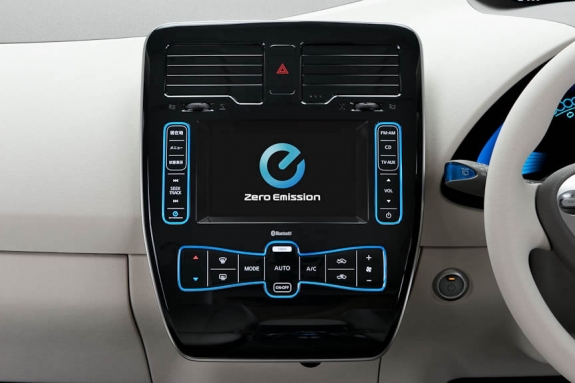
NISSAN LEAF (NOW ON SALE)


PROTON EMAS CONCEPT CAR ( MALAYSIAN FUTURE CAR =) )


PORSCHE 918 SPYDER HYBRID SUPER CAR (HYBRID SUPER CAR WITH ELECTRIC PLUG-IN)


VOLSWAGEN ELECTRIC MILANO TAXI


TOYOTA 3RD GENERATION OF PRIUS HYBRID


Looking at the pictures above, the hybrid technology is offering promising alternative for building "a car for tomorrow". Car manufacturers are currently applying different technology adaptation on various category of hybrid cars which seems to be very practical. It is indeed a great effort towards greener world as well as sustainable mobility. Even though the technology offered is not yet perfect, I strongly believe that continuous development of advanced hybrid technology would provide impressive efficiency at affordable price, improved equipments and thus able to significantly reduce the dependence on fossil fuel to power our vehicles. Let's hope that the benefits of hybrid vehicles would really outweigh the cost.